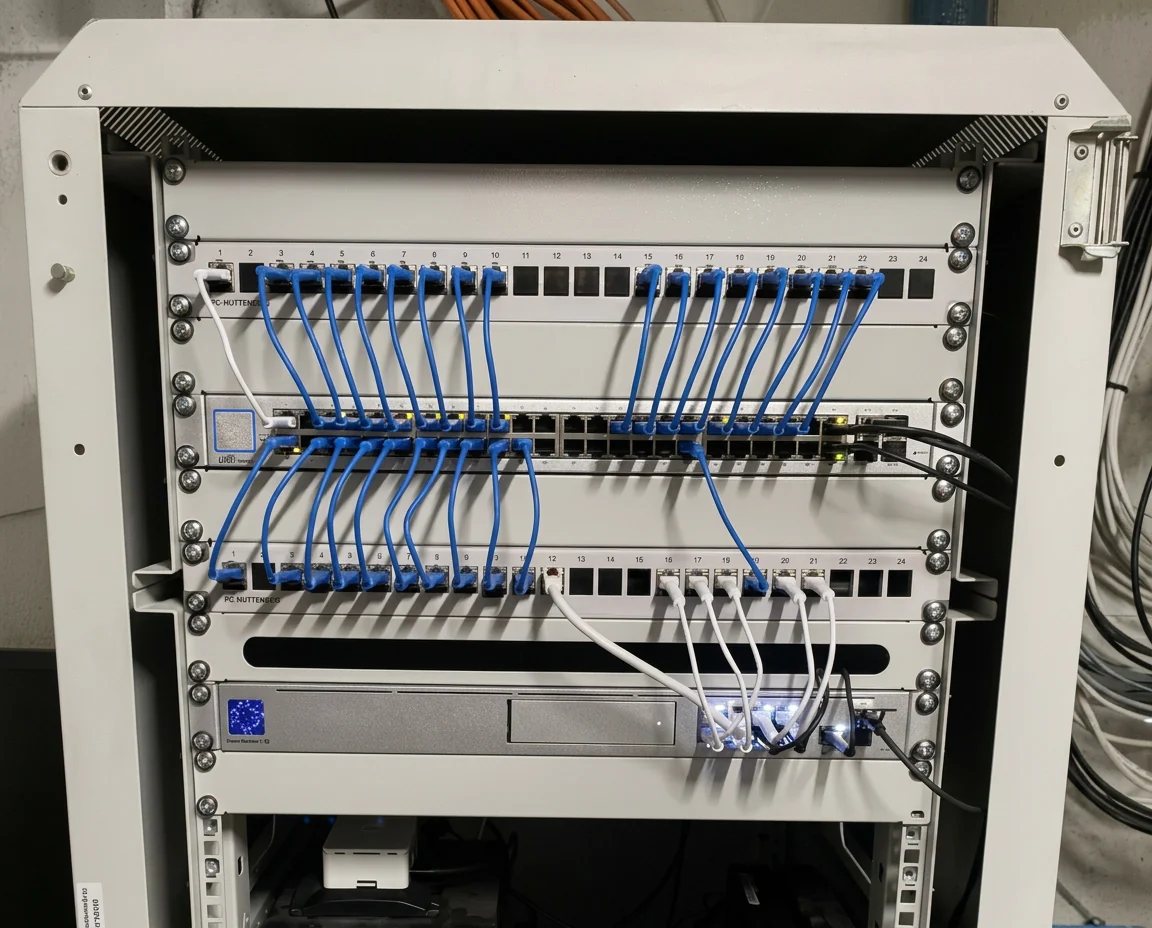
A rack or structured panel gives your network one organized home: cables terminated on a patch panel, switching and gateway mounted, power protected, and every port labeled. It is mostly about making the system serviceable — and it is the step homeowners regret skipping.
Coiled cable, unlabeled runs, a switch balanced on a shelf, power bricks hanging off one strip, and heat with nowhere to go. Every future change becomes a guessing exercise, and equipment in a closed cabinet with no airflow runs hot and fails early.
How it gets built
Runs are terminated on a patch panel, equipment is mounted and powered properly, and airflow is addressed before the door closes.
Patch panel termination with every port labeled
Rack- or panel-mounted gateway, switch and recorder
PoE switching sized for access points and cameras
Surge protection, cable management and ventilation
Common projects
Installing a new rack
A wall-mount or floor rack in a closet, garage or utility room.
Cleaning up an existing panel
Re-terminating, labeling and organizing what is already there.
Upgrading equipment
Replacing a consumer router and unmanaged switch with proper gear.
Relocating equipment
Moving the network out of a bedroom closet or media cabinet.
Want your network equipment cleaned up?
Submitting costs nothing. Your contact details stay private until a matched professional takes your project.